
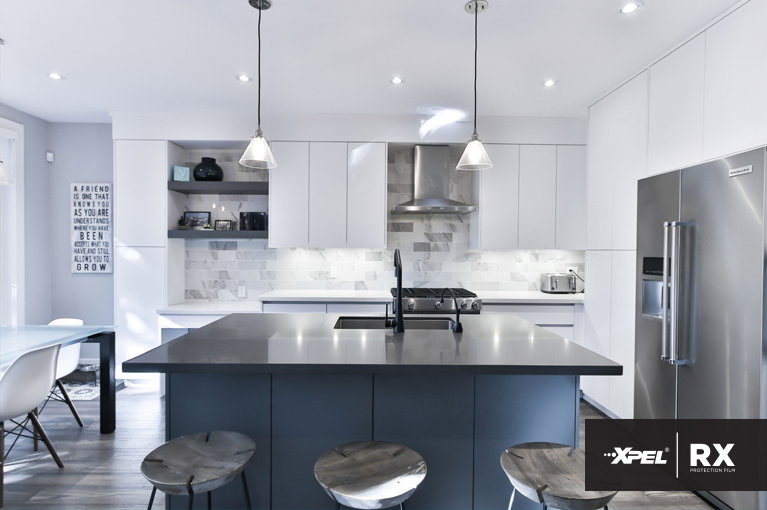
Antimicrobial film is a thin, clear protective film that inhibits the growth of bacteria, mould, mildew, and fungi on the surfaces you touch every day. The film most people install is XPEL RX, a zinc-ion-infused thermoplastic polyurethane that comes in two finishes: gloss and matte. Both finishes do the same protective job, so the choice usually comes down to the surface you are covering and the look you want. This guide compares the two and answers whether antimicrobial film is worth it.

What is the difference between gloss and matte antimicrobial film?
The difference between gloss and matte antimicrobial film is the surface finish, not the protection. Both gloss and matte XPEL RX are the same zinc-ion-infused thermoplastic polyurethane, and both inhibit bacteria, mould, mildew, and fungi on high-touch surfaces and screens.
- Gloss finish: a clear, reflective surface that keeps the original shine of whatever it covers.
- Matte finish: a flat, non-reflective surface that cuts glare and hides fingerprints.
The antimicrobial performance is identical between the two. You are only choosing how the finished surface looks and reflects light.
Which finish is better for screens versus surfaces?
Matte antimicrobial film is usually better for screens, and gloss is usually better for solid surfaces. The reason is glare and clarity.
- Screens (tablets, kiosks, touch panels, displays): matte XPEL RX reduces reflections and hides fingerprints, which keeps the display readable under bright lights.
- Solid surfaces (door handles, push plates, counters, railings, cabinet pulls): gloss XPEL RX blends in with surfaces that are already shiny and is easy to wipe clean.
If a screen sits in a bright room or under overhead lighting, matte is the safer pick. If you want the film to disappear on a polished or chrome surface, gloss is the better match.
Does antimicrobial film change how a surface looks?
Antimicrobial film changes how a surface looks only as much as the finish you choose. XPEL RX is designed to be a thin, low-profile film, so on most surfaces it goes largely unnoticed once installed.
- Gloss keeps a surface looking shiny and close to its original appearance.
- Matte adds a flat, satin look and removes reflections.
On a glossy door handle, gloss film keeps the shine. On a screen that you want to read without glare, matte film changes the reflection but improves usability. Either way, the film is protecting the surface underneath.
Is antimicrobial film worth the investment?
Antimicrobial film is worth it for high-touch surfaces in shared or public spaces where hygiene matters. XPEL RX works continuously to inhibit bacteria, mould, mildew, and fungi, so it adds a layer of protection that ordinary cleaning between wipe-downs does not.
It tends to pay off most in places like:
- Reception desks, counters, and point-of-sale screens.
- Door handles, push plates, and railings.
- Shared tablets, kiosks, and touch panels.
- Washroom fixtures and other frequently handled surfaces.
For a private surface that only one person touches, the value is lower. For surfaces that many hands touch every day, antimicrobial film is an easy way to support a cleaner environment.
How do you decide between gloss and matte finish?
Decide based on the surface, the lighting, and the look you want, because the protection is the same either way. Walk through these three questions.
- Is it a screen? If yes, lean matte to cut glare and hide fingerprints.
- Is the surface already shiny? If yes, gloss blends in best.
- Is the area brightly lit? If yes, matte reduces reflections and keeps surfaces readable.
When you are unsure, ask your installer to show you both finishes on a sample. Seeing gloss and matte side by side on the actual surface makes the choice obvious in about a minute.
Can you mix gloss and matte film in the same space?
Yes, you can mix gloss and matte antimicrobial film in the same space, and many installs do exactly that. A common setup is matte XPEL RX on screens to control glare and gloss XPEL RX on handles and counters to keep them looking clean and shiny. Because both finishes deliver the same antimicrobial protection, mixing them is purely a visual decision.
Frequently asked questions
Does matte antimicrobial film protect as well as gloss?
Yes. Matte and gloss XPEL RX are the same zinc-ion-infused thermoplastic polyurethane and both inhibit bacteria, mould, mildew, and fungi equally. The finish only changes the look, not the protection.
What surfaces can antimicrobial film be applied to?
Antimicrobial film is made for high-touch surfaces and screens. That includes door handles, push plates, counters, railings, kiosks, tablets, and touch panels in homes, offices, and public spaces.
Is antimicrobial film noticeable once installed?
On most surfaces it is barely noticeable. Gloss film keeps the original shine and matte film adds a flat, glare-free finish, so the film blends in while it protects the surface underneath.
Not sure which finish fits your space? Lightning Tint is a certified XPEL dealer in Red Deer, and we can walk you through gloss versus matte and apply XPEL RX antimicrobial film installation on your high-touch surfaces and screens. Get a fast, free quote through our contact page or call 403-986-8255, and ask about our free pick-up and drop-off across Red Deer and central Alberta.
