
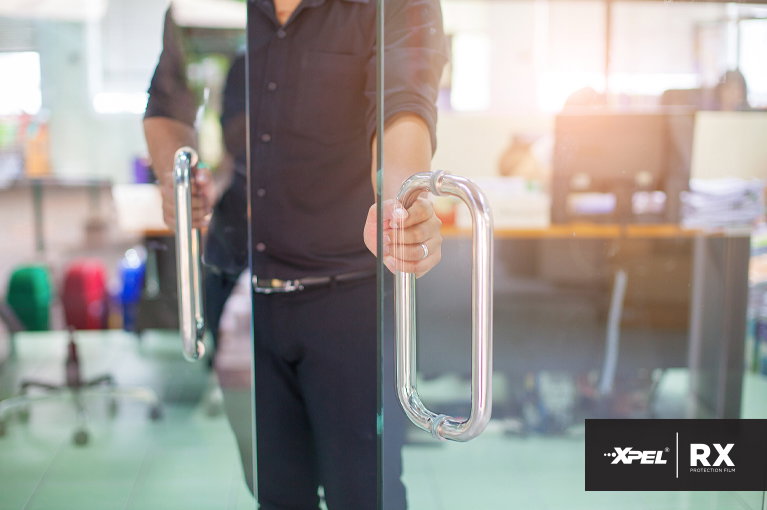
Antimicrobial film belongs on the high-touch surfaces people contact most often, like door handles, push plates, elevator buttons, railings, countertops, and shared screens. XPEL RX is a zinc-ion-infused thermoplastic polyurethane film that inhibits the growth of bacteria, mould, mildew, and fungi on the surfaces it covers. It comes in gloss or matte finishes, so it works on both visible architectural surfaces and everyday hardware. This guide walks through exactly where antimicrobial film goes and how to decide which surfaces in your space need it most.
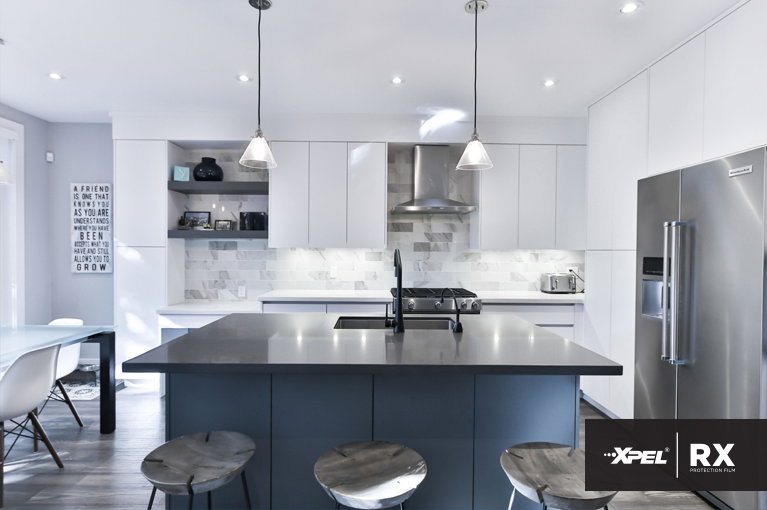
What are the most common high-touch surfaces for antimicrobial film?
The most common high-touch surfaces for antimicrobial film are the points many different people touch throughout the day. These are the spots where hands transfer germs most often, which makes them the priority for XPEL RX.
- Door handles, levers, and push plates
- Elevator buttons and call panels
- Handrails and stair railings
- Light switches and thermostats
- Countertops and reception desks
- Shared touchscreens, kiosks, and tablets
- Cabinet pulls and drawer handles
If a surface gets touched by more than one person regularly, it is a candidate for antimicrobial film.
Can antimicrobial film go on door handles and push plates?
Yes, antimicrobial film goes on door handles and push plates, and these are some of the best places to use it. Door hardware is touched constantly, so it is a prime spot for XPEL RX to inhibit bacteria, mould, mildew, and fungi.
The film conforms to levers, knobs, and flat push plates, and the gloss or matte finish lets it blend with existing hardware. On a busy entry door, antimicrobial film covers the exact contact point hands reach for every time.
Does antimicrobial film work on elevator buttons and railings?
Yes, antimicrobial film works on elevator buttons and railings, two of the highest-traffic touch points in any building. XPEL RX is built for these shared, repeatedly touched surfaces.
For elevator buttons, the film covers the panel where every passenger presses. For railings, it wraps the gripping surface along stairs and ramps. Because XPEL RX is a thermoplastic polyurethane film, it is durable enough to hold up to constant contact while continuing to inhibit microbial growth.
Can it be applied to countertops and reception desks?
Yes, antimicrobial film can be applied to countertops and reception desks where people lean, sign, and set items down. These broad horizontal surfaces collect contact all day, so XPEL RX is a strong fit.
The gloss or matte options matter here because countertops and desks are visible surfaces customers and staff see up close. You get the antimicrobial benefit without changing the look of a clean, professional front desk or service counter.
What other surfaces benefit from antimicrobial film?
Other surfaces that benefit from antimicrobial film include screens, switches, and any shared piece of equipment people touch with their hands. XPEL RX is made for high-touch surfaces and screens, so it extends well beyond door hardware.
- Point-of-sale and self-checkout screens
- Tablets and shared device displays
- Light switches and dimmers
- Vending machine and kiosk panels
- Appliance handles and control pads
How do you choose where to apply antimicrobial film?
You choose where to apply antimicrobial film by following the hands, prioritizing the surfaces touched by the most people, the most often. Map the path a typical visitor takes through your space and mark every spot they contact.
- List every surface multiple people touch in a day.
- Rank them by how many hands touch them and how often.
- Start with shared entry and transit points like door handles, elevator buttons, and railings.
- Add work and service surfaces like countertops, reception desks, and shared screens.
- Choose gloss or matte XPEL RX to match each surface’s finish.
This approach puts antimicrobial film exactly where it does the most good and keeps the look consistent across your space.
Frequently asked questions
What surfaces should antimicrobial film go on first?
Antimicrobial film should go first on the most-touched shared surfaces: door handles, push plates, elevator buttons, and railings. These contact the most hands each day, so XPEL RX delivers the biggest benefit there.
Does antimicrobial film come in different finishes?
Yes, XPEL RX antimicrobial film comes in gloss and matte finishes. That lets it match hardware, countertops, and screens so it protects high-touch surfaces without changing how they look.
Can antimicrobial film be applied to screens?
Yes, antimicrobial film can be applied to screens. XPEL RX is designed for high-touch surfaces and screens, including point-of-sale displays, kiosks, and shared tablets.
Ready to protect the high-touch surfaces in your space? Learn more about our XPEL RX antimicrobial film installation in Red Deer and central Alberta. As a certified XPEL dealer in business since 2012 with a 4.8-star Google rating, Lightning Tint maps your highest-touch points and applies the right finish to each one. Get a fast free quote through our contact page or call 403-986-8255. We offer free pick-up and drop-off across Red Deer, Blackfalds, Sylvan Lake, Lacombe, and Innisfail.
